Global Travel Etiquette eBook: Cultural Tips & Manners
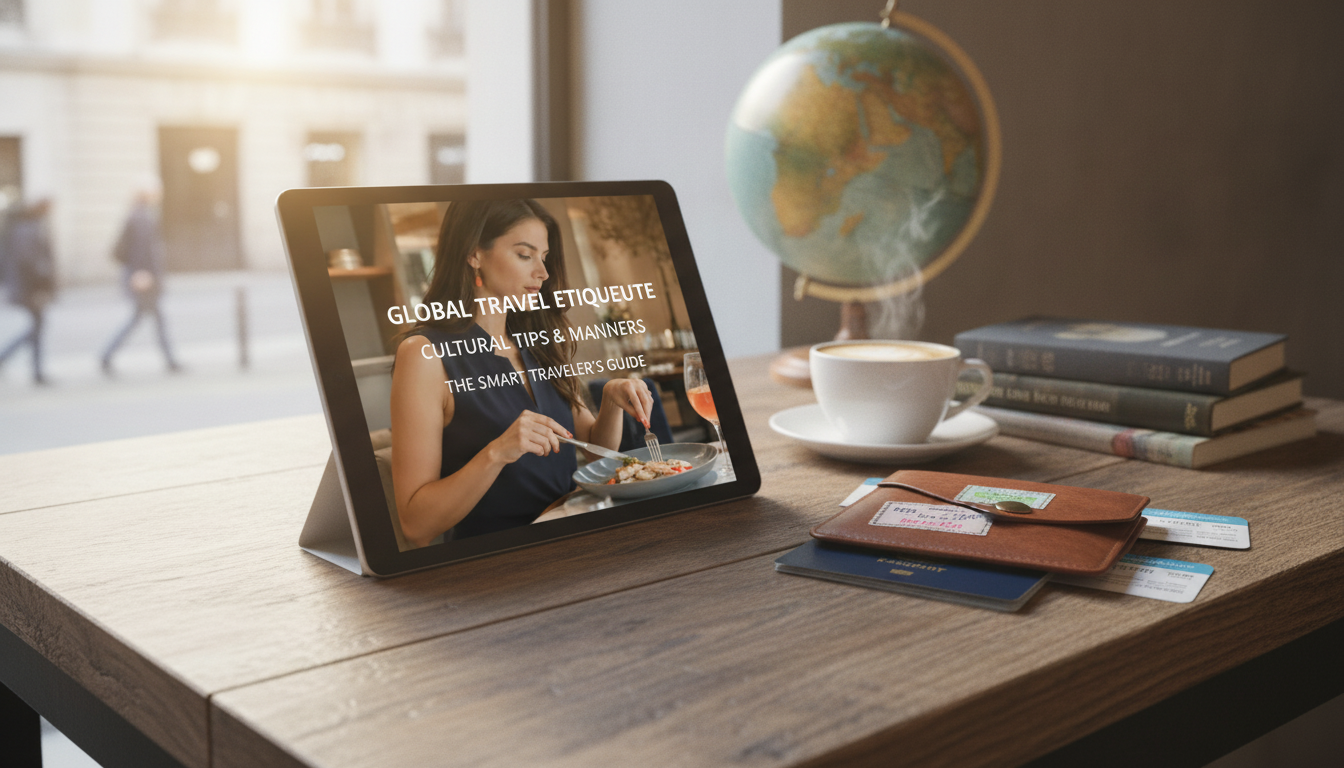
The Smart Traveler’s Guide to Global Etiquette: Cultural Tips and International Manners (Digital Download)
Travel feels easier when social rules are clear. This digital guide helps travelers navigate greetings, dining, dress, gestures, punctuality, and respectful communication across regions—so encounters stay friendly, misunderstandings shrink, and confidence grows from arrival to departure. Whether the trip is for vacation, study abroad, or work, thoughtful manners can turn everyday moments—ordering coffee, entering a temple, meeting a host—into smoother, more welcoming experiences.
What This Digital Guide Helps With
- Builds a practical foundation for respectful behavior in unfamiliar cultures, without requiring you to memorize hundreds of country-specific rules.
- Covers common friction points: greetings, personal space, tipping, dining, dress, and public behavior.
- Helps travelers avoid unintended offense in both business and leisure settings, where expectations can be very different.
- Designed for quick reference before a trip and fast checks while planning, so you can refresh your approach in minutes.
For travelers who like having a simple framework on hand, Get The Smart Traveler’s Guide to Global Etiquette (Digital Download) and keep it ready on your phone, tablet, or laptop when you’re mapping out days and meeting new people.
The “Etiquette Hotspots” That Cause Most Travel Missteps
- Greetings: handshakes, bows, cheek kisses, titles, and when first names are appropriate.
- Personal space and touch: how close to stand, when physical contact is welcomed, and when it’s not.
- Time and punctuality: what “on time” means and how scheduling norms vary.
- Dining expectations: seating, utensil use, shared dishes, and appropriate conversation topics.
- Money and service norms: tipping, bargaining, gift-giving, and how to handle refusals politely.
- Photography and privacy: when consent is expected and how to ask without awkwardness.
These are the situations where well-meaning travelers most often get tripped up: not because they’re careless, but because they apply “home rules” automatically. A reliable etiquette reference helps you pause, notice cues, and choose a respectful default.
Quick Reference: Common Situations and What to Do
- Use simple, respectful openers: greeting + polite question before requests.
- Mirror formality: start formal, then relax only if locals do.
- When unsure, ask: a brief question is often viewed as respectful.
- Apologize quickly and lightly if a mistake happens; don’t overexplain.
- Learn a few key phrases: hello, please, thank you, excuse me, and “Do you recommend…?”
Everyday Moments and Safe Defaults
| Situation | Safe default behavior | What to avoid |
|---|---|---|
| Meeting someone new | Offer a neutral greeting and wait for cues (handshake, bow, etc.) | Initiating hugs or overly casual jokes too quickly |
| Entering a home or sacred place | Ask about shoes, dress expectations, and photography rules | Assuming access, touching religious objects, loud conversation |
| Dining out | Follow the host’s lead on seating, ordering, and pace | Starting to eat before others if a shared start is expected |
| Tipping and service | Check local norms; tip only when customary and appropriate | Applying home-country tipping habits everywhere |
| Negotiating prices | Stay friendly; ask politely and accept “no” gracefully | Aggressive bargaining, public embarrassment, or sarcasm |
| Taking photos | Ask permission and respect a refusal immediately | Photographing children, ceremonies, or officials without consent |
Regional Etiquette Themes to Keep in Mind
Even when you don’t know every local custom, a few “big-picture” themes can guide your choices:
- High-context vs. low-context communication: some cultures value directness; others use more indirect language where “no” may be softened to preserve harmony.
- Honorifics and titles: professional or family titles can carry more weight than first names, especially at first meeting.
- Face-saving and public disagreement: correcting someone in public can be sensitive; private, gentle phrasing often lands better.
- Gestures and body language: a common hand sign at home can mean something very different elsewhere.
- Dress and modesty: climate, religion, and setting can change expectations from streetwear to sacred sites to formal venues.
For destination-specific safety and entry guidance alongside etiquette planning, it’s smart to review official travel advisories such as the U.S. Department of State — International Travel or the UK Foreign, Commonwealth & Development Office — Foreign Travel Advice.
Business Travel and Formal Situations
How to Use the eBook Before and During a Trip
If you’re building a small digital travel library, pairing etiquette guidance with destination inspiration can help balance “what to do” with “how to do it.” For a nature-forward trip at home, you can also Explore Top 10 Must-See U.S. National Parks + Fast Facts (Digital Travel Guide).
Digital Download Details and Who It’s Best For
Country profiles can also help you understand broader context—languages, religions, and social structure—before you land. The CIA World Factbook — Country Information is a useful starting point for quick, factual overviews.
Shop Digital Travel Guides
- The Smart Traveler’s Guide to Global Etiquette | Digital Download eBook for Cultural Tips, Travel Etiquette, and International Manners
- Top 10 Must-See U.S. National Parks + Fast Facts | Digital Travel Guide eBook for Nature Lovers, Hikers & Adventure Planners
FAQ
Does this guide cover etiquette for multiple countries or just one region?
It focuses on broad cross-cultural etiquette principles plus region-appropriate themes you can apply in many destinations. The goal is to help you make respectful choices widely, even when you’re moving across borders.
How do travelers handle etiquette when they’re unsure what’s appropriate?
Start more formal than casual, observe what locals do, and ask a short, respectful question when needed. If you make a mistake, a brief apology and quick adjustment usually resolves it smoothly.
Is this a physical book or a digital download?
It’s a digital download eBook, designed for convenient trip planning and quick reference on your devices. That makes it easy to review before you go and check again during your itinerary.












Leave a comment