4-Week Fit-at-Home Plan: Daily Workouts + Stretches
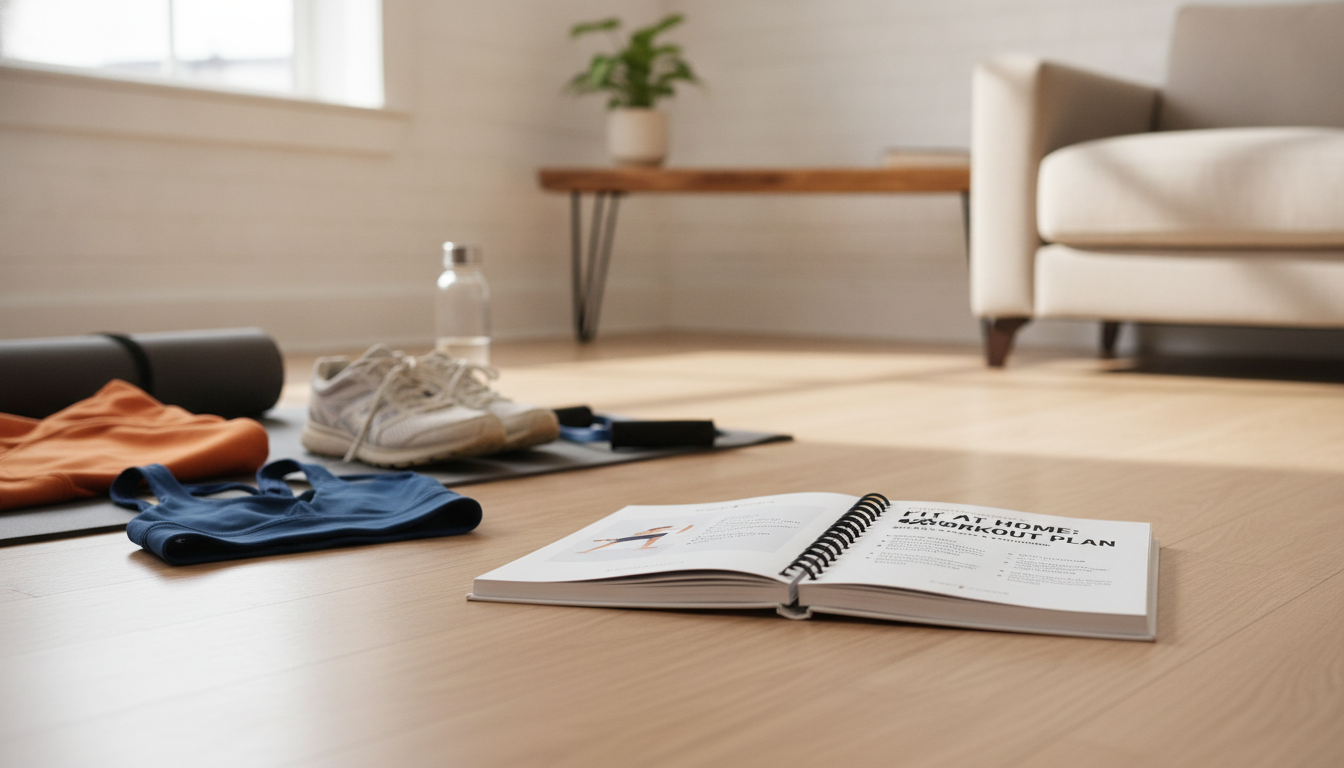
Fit at Home: A Practical 4-Week Plan with Daily Workouts, Stretches, and Minimal Equipment
A simple home routine works best when it’s structured, repeatable, and easy to follow day-to-day. This 4-week plan is built around short daily sessions that combine strength, mobility, and stretching—using minimal equipment and clear guidance so workouts feel doable even on busy weeks.
What makes a 4-week home plan easier to stick with
Consistency usually breaks down when workouts feel complicated, time-consuming, or hard to start. A 4-week plan works well at home because it keeps the daily decision-making small and the momentum high.
- Daily structure reduces decision fatigue: warm-up, main set, cool-down stretch—same flow each day.
- Minimal equipment removes setup barriers: you can train in a small space, while traveling, or between errands.
- Week-to-week progression keeps it interesting: small increases in volume, tempo, or density help prevent “plateau boredom.”
- Built-in stretching supports recovery: mobility stays part of the routine instead of an afterthought.
- A written plan improves follow-through: you can track completion, adjust intensity, and stay accountable.
If your goal is general fitness, the CDC recommends adults aim for a mix of aerobic activity and muscle-strengthening work each week. A home plan can cover both without needing a full gym setup. See guidelines here: CDC — How much physical activity do adults need?.
What’s included in the Fit at Home PDF eBook
If you want a clear day-by-day routine you can reference on your phone or print out, the Fit at Home: 4-Week Workout Plan (PDF eBook) is built around practical sessions that don’t require a lot of gear or guesswork.
- A full 4-week schedule with daily workouts and dedicated stretches
- Step-by-step guidance for common at-home movements (lower body, upper body, core, full-body)
- A repeatable session format that can scale up or down based on fitness level
- Recovery-friendly elements to reduce the “all or nothing” cycle
- A clean digital format that’s easy to reference from a phone, tablet, or printed pages
Minimal equipment setup (and easy substitutes)
You can start with bodyweight and a small clear area. If you have dumbbells or a resistance band, they add easy ways to progress—but they’re optional. The key is having a few “go-to” substitutes so you never lose a workout to missing equipment.
Equipment Options and Substitutes
| Need | Minimal Option | Substitute | Best For |
|---|---|---|---|
| Resistance | Resistance band | Towel isometrics / slow tempo | Strength progressions |
| Added load | Dumbbells | Backpack with books | Legs, rows, presses |
| Support | Yoga mat | Folded blanket | Core and floor moves |
| Elevated surface | Step/bench | Sturdy chair | Step-ups, incline push-ups |
| Timing | Interval timer | Phone stopwatch | Circuit pacing |
Consistency tip: leave your mat, band, or dumbbells visible. Removing “setup friction” often matters more than finding the perfect program.
How the 4 weeks typically progress
Progress at home doesn’t have to mean complicated periodization. Most people do best with simple weekly nudges—slightly more work, slightly better control, or slightly shorter rests.
- Week 1: establish form, learn movement patterns, and set a baseline for effort
- Week 2: slightly higher volume or longer work intervals while keeping technique steady
- Week 3: more challenge via denser circuits, added resistance, or slower tempo control
- Week 4: a consolidation week to reinforce consistency and finish strong without burnout
- Common progression methods: extra rounds, more reps, longer time under tension, shorter rests, or small load increases
If you want to align your routine with broad, evidence-based training recommendations, the American College of Sports Medicine summarizes helpful guidelines here: ACSM — Exercise Guidelines.
A sample weekly structure (strength, mobility, and recovery balance)
A balanced week typically rotates strength patterns (squat/hinge/push/pull/core), adds moderate conditioning, and keeps mobility work frequent enough to matter. That structure supports fitness gains without making every day feel “all-out.”
- Strength-focused days: lower body, upper body, and full-body patterns
- Conditioning days: low-impact or moderate-intensity circuits to build stamina without machines
- Mobility and stretch emphasis: hips, hamstrings, calves, chest/shoulders, and spine rotation
- Recovery approach: planned lighter days reduce soreness spikes and improve follow-through
- If you miss a day: resume the next day rather than doubling up
How to scale each workout to beginner, intermediate, or advanced
Scaling is what makes a plan repeatable. The goal is to keep technique stable while adjusting the “dials” that control difficulty: leverage, range of motion, tempo, rest, and load.
Daily stretches: what to focus on and why it matters
Safety, form, and recovery basics for home training
How to use the PDF day-to-day (simple routine that lasts)
More digital guides you may like
- Fit at Home: 4-Week Workout Plan | Minimal Equipment Exercise Guide PDF | Home Fitness eBook with Daily Workouts & Stretches
- Top 10 Must-See U.S. National Parks + Fast Facts | Digital Travel Guide eBook for Nature Lovers, Hikers & Adventure Planners
- Homework Help Made Easy Toolkit for Parents – Printable Guide for Creating Study Habits, Homework Strategies & Independent Learning
FAQ
How long are the daily workouts?
Most sessions can fit into about 15–35 minutes, depending on rest periods and how many rounds you complete. Strength-focused days tend to run a bit longer, while mobility and recovery days are usually shorter.
Do I need dumbbells or can this be done with bodyweight only?
You can do the plan with bodyweight only, and still progress by slowing tempo, adding pauses, increasing range of motion, or using unilateral variations. Dumbbells or bands simply make it easier to scale resistance as you get stronger.
Is this suitable if I’m returning to exercise after a break?
Yes—start conservative with fewer rounds, longer rests, and a strong focus on clean form. If you have injuries, chronic conditions, or pain, check with a clinician or physical therapist before pushing intensity.











Leave a comment