4-Week Puppy Training Plan: Potty, Cues & Socialization
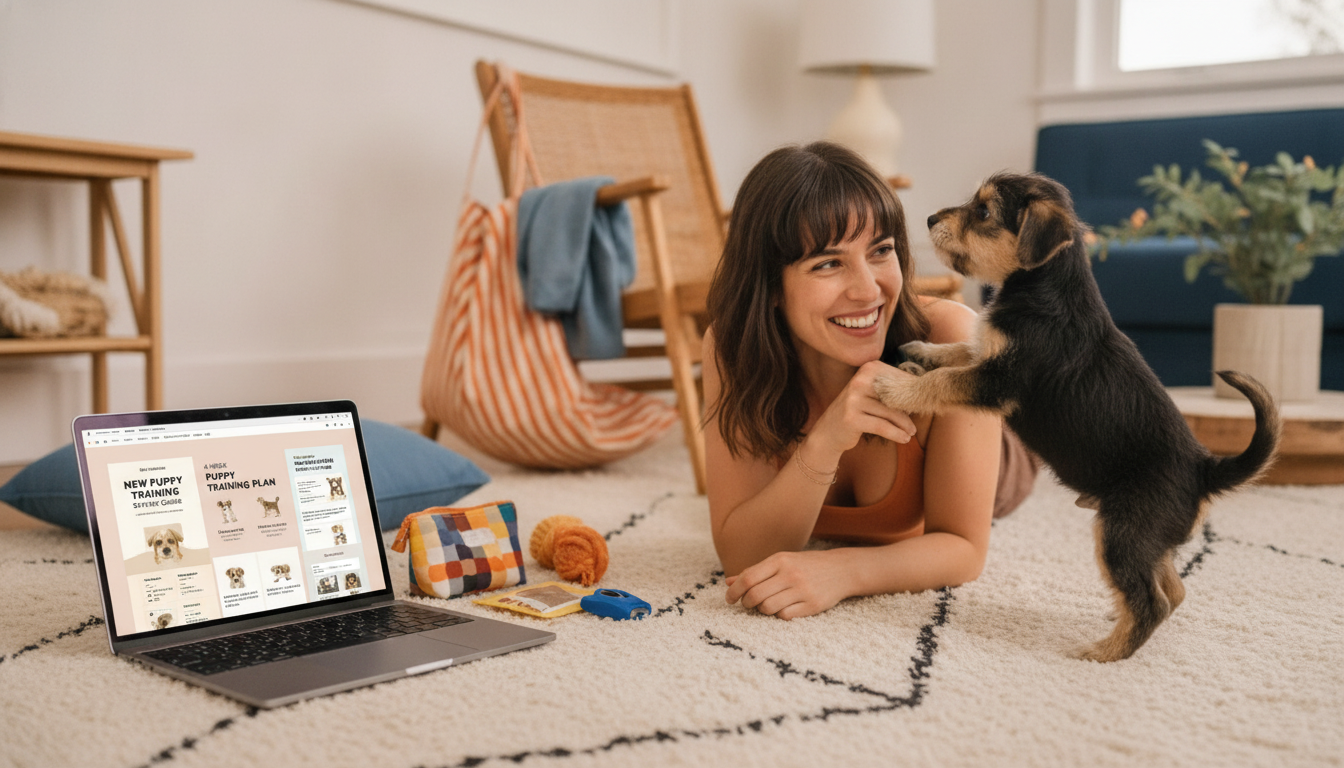
New Puppy Training Starter Guide: A 4-Week Routine for House Training, Commands, and Socialization
A new puppy learns fastest with simple routines, clear rewards, and short sessions that repeat every day. This starter guide focuses on the first four weeks at home: setting up a predictable schedule, building calm crate habits, teaching core cues, and planning safe socialization so confidence grows without overwhelm.
What to Set Up Before Training Starts
Before practicing cues or expecting reliable potty habits, set the environment so your puppy can succeed. Good training is mostly prevention, followed by quick rewards for the behaviors you want.
- Choose a small, puppy-proofed area (or playpen) to prevent rehearsing unwanted behaviors like chewing, counter-surfing, and indoor potty accidents.
- Pick rewards that are easy to deliver quickly: tiny soft treats, kibble, a favorite toy, and gentle praise. Keep rewards within reach in multiple rooms.
- Decide on consistent cue words for everyone in the home (example: “sit,” “down,” “come,” “leave it,” “drop it,” “touch”).
- Plan management tools: crate, baby gates, leash, harness, chew toys, enzyme cleaner for accidents, and a treat pouch.
- Set realistic session length: 1–3 minutes for brand-new behaviors, several times per day, with play and rest in between.
If you want a printable plan you can post on the fridge, the New Puppy Training Starter Guide (printable 4-week eBook) organizes routines, cues, and socialization checklists in one place.
A Simple Daily Puppy Routine (Sleep, Potty, Food, Play, Training)
Most “training problems” get easier when the day has a steady rhythm. Use a repeatable loop: wake → potty → play/training → food → potty → nap. Puppies commonly need 18–20 hours of sleep per day; overtired puppies tend to bite more and focus less.
- Potty timing anchors the day: immediately after waking, after eating/drinking, after play, and about every 1–2 hours for young puppies (adjust for age and success rate).
- Keep “free roaming” earned, not automatic. Supervise or confine so the puppy cannot sneak off to potty or chew.
- Match exercise to age and confidence: short sniff walks, gentle play, and exploration are often better than long, forced walks.
Sample day template (adjust times to your household)
| Time block | What to do | Goal |
|---|---|---|
| Wake up | Potty break immediately, then a calm reward | Build a habit of going outside first |
| Morning | Breakfast, water, potty, short play | Predictability and fewer accidents |
| Training micro-session | 1–3 minutes: sit or name game | Fast wins and focus |
| Nap/quiet time | Crate or pen with a chew | Rest and calm independence |
| Midday | Potty, enrichment (snuffle mat, lick mat), brief walk | Mental work without overstimulation |
| Afternoon | Short training: leash skills or recall game | Foundations for real-life manners |
| Evening | Dinner, potty, calm play, settle practice | Lower arousal before bedtime |
| Bedtime | Last potty, then sleep in crate/pen | Night routine and fewer wake-ups |
Week-by-Week Plan for the First 4 Weeks
Think of the first month as layering skills: first safety and predictability, then cues, then real-life manners, then practicing in more places. Keep difficulty low enough that your puppy can win often.
- Week 1: Bonding + management. Teach the puppy’s name, reward checking in, start crate comfort, and establish frequent potty trips with calm praise.
- Week 2: Foundations. Add “sit,” “down,” and “touch” (nose to hand). Begin gentle leash practice indoors and short outdoor sessions in low-distraction areas.
- Week 3: Real-life skills. Add “leave it,” start brief “stay” (1–2 seconds), practice polite greetings (four paws on the floor), and reinforce calm settling on a mat.
- Week 4: Generalization. Practice cues in different rooms, outdoors, and around mild distractions. Increase duration gradually and keep success high.
- Progress is not linear. If accidents, pulling, or biting spike, reduce difficulty: shorten sessions, increase management, and reward calmer moments.
House Training That Sticks (Without Punishment)
House training works best when it’s simple: prevent accidents, reward outdoor success immediately, and clean mistakes thoroughly. Punishment tends to create fear and “sneaky” potty behavior rather than faster learning.
Core Commands for Beginners (Fast, Friendly Training)
Socialization the Safe Way: Confidence Over Crowd Exposure
Socialization means positive, controlled experiences—not meeting everyone. Focus on calm observation, gentle handling, and new sights/sounds at a distance your puppy can handle. For a deeper look at timing and safety, see the American Veterinary Society of Animal Behavior (AVSAB) position statements.
If household sounds are the sticking point, Helping Pets Handle Vacuum Stress can support a step-by-step approach for calmer reactions around cleaning routines.
Common Early Challenges (And What Usually Helps)
For additional training fundamentals and handling tips, the American Kennel Club’s puppy training basics is a helpful reference.
FAQ
How often should a new puppy go outside for potty breaks?
Most puppies need a potty break right after waking, after eating or drinking, after play, and about every 1–2 hours when they’re very young. If accidents happen, shorten the interval for a few days; if your puppy stays clean consistently, extend time gradually and keep rewarding outdoor success.
What are the first commands to teach a puppy?
Start with name response and “touch” for easy engagement, then add “sit,” “down,” and a fun indoor “come” game for safety. Round it out with “leave it” and “drop it” to prevent grabbing and to build trust during trades.
How do you socialize a puppy without overwhelming them?
Use calm, controlled exposure at a distance where your puppy can stay relaxed and take treats, then slowly move closer over multiple sessions. Keep experiences brief, watch for stress signals (freezing, tucked tail, refusing food), and ask your veterinarian about vaccine timing and safe public outings for your puppy’s age.









Leave a comment