Cat Body Language: Printable Cheat Sheet & Signal Guide
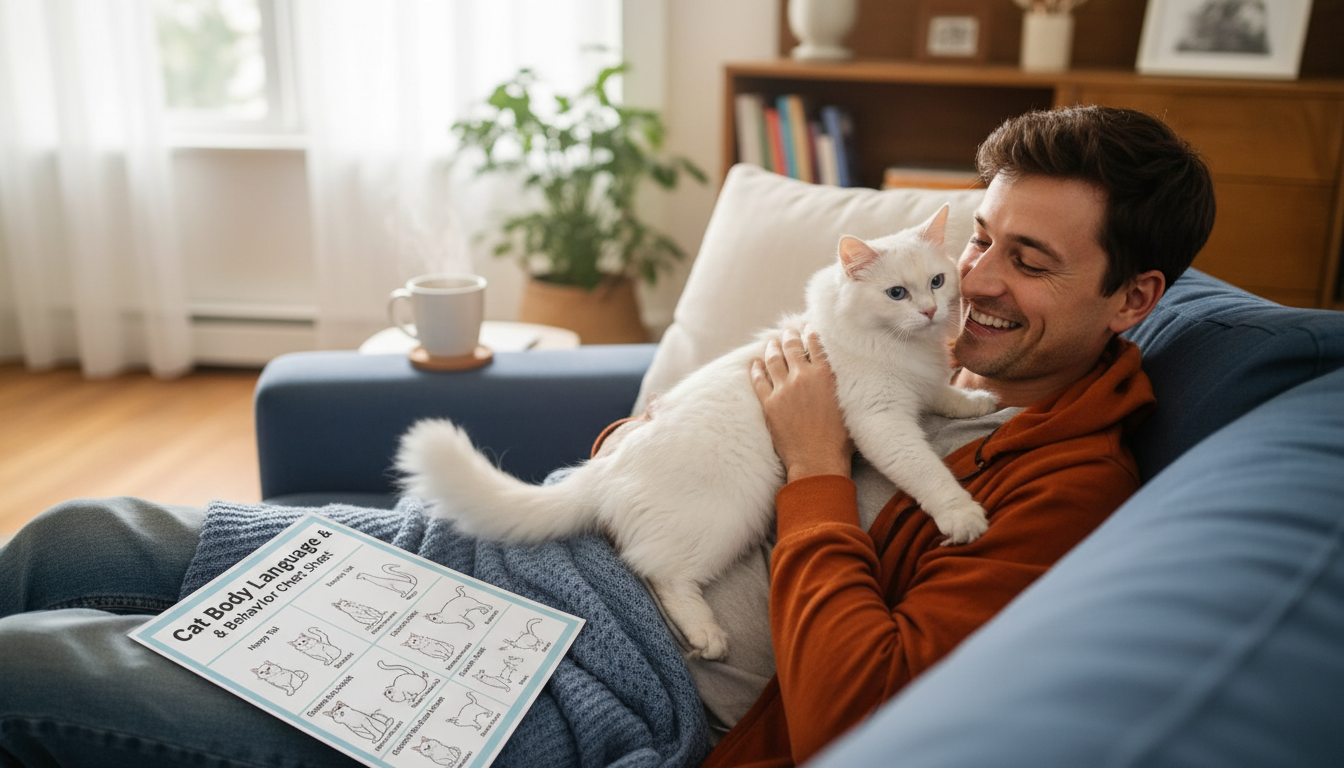
Cat Body Language & Behavior: A Printable Guide to Signals, Postures, and Meows
Cats communicate constantly—often quietly—through tail position, ear angles, whiskers, posture, and vocal cues. Reading the “whole picture” helps spot comfort, stress, play, and “back off” signals early, making daily handling, introductions, and vet visits calmer and safer. A simple, printable cheat sheet can also keep everyone in the household consistent during those fast, confusing moments when a cat shifts from relaxed to overwhelmed.
How cats communicate: the full signal “sentence”
Cat communication works like a sentence made of multiple parts: tail + ears + eyes + whiskers + posture + movement. One sign by itself can be misleading, so aim to read clusters.
- Focus on combinations, not single signs: a tail flick might mean play focus during a toy chase, or irritation during petting—body tension and ear position clarify which one it is.
- Context matters: the same posture at the food bowl can be anticipation, while the same posture in a hallway may be worry or guarding.
- Watch transitions: a quick shift from loose to stiff (or a sudden freeze) often predicts swats, bites, or bolting.
- Respect distance: stepping back is often the fastest way to de-escalate fear or overstimulation.
For deeper behavior basics and welfare-friendly handling, see International Cat Care and the Cornell Feline Health Center.
Tail positions and motion: confidence, curiosity, and caution
The tail is one of the clearest “at a distance” indicators. Look at both position and speed of movement.
- Tail up (often with a hook at the tip): friendly approach and social confidence—often a good time for gentle greetings.
- Tail low or tucked: uncertainty or fear—reduce noise, offer hiding options, and avoid reaching over the cat.
- Puffed tail: high arousal (fear or surprise)—pause interaction and create a clear escape route.
- Fast lashing or thumping: irritation or overstimulation—end petting and offer space.
- Slow swish while stalking toys: focused play drive—redirect to wand toys instead of hands.
If your cat’s tail signals change when the environment changes (like loud appliances), planning ahead can help. For noise-sensitive homes, Helping Pets Handle Vacuum Stress is a practical add-on for building calmer routines.
Ears, eyes, and whiskers: the “dashboard” of emotion
Ears, eyes, and whiskers can shift in seconds, which makes them especially useful for predicting whether a cat is about to lean in…or bail out.
- Ears forward: interest and engagement; if the body is also soft, this often means relaxed friendliness.
- Ears sideways (“airplane ears”): uncertainty; slow down movements and avoid cornering.
- Ears flattened back: fear or defensive aggression; stop approaching and lower stimulation.
- Slow blink: relaxed, affiliative signal; respond with a slow blink and calm voice.
- Dilated pupils: excitement, fear, or low light—check the setting and body tension before handling.
- Whiskers forward: curiosity or hunting/play; whiskers pinned back: stress or discomfort.
Body posture and movement: relaxed, playful, defensive, or ready to flee
Posture reveals “what happens next.” A cat may tolerate contact while still preparing to escape or defend—especially if they feel trapped.
- Loose, curved body with normal breathing: comfortable; usually safe for light interaction.
- Crouched low with weight shifted back: preparing to bolt; increase distance and avoid blocking exits.
- Sideways stance with arched back: threat display; do not reach, herd, or punish.
- Rolling to show belly: often a trust display, not a request for belly rubs; offer chin/cheek pets instead.
- Freezing: a high-stress pause; stop what is happening and allow the cat to reset.
- Overgrooming or sudden grooming: can be displacement behavior during stress; lower pressure and provide calm enrichment.
Vocalizations: what different meows and sounds commonly mean
Cat sounds are flexible. Use tone, frequency, and the rest of the body-language “sentence” to interpret them.
Quick reference chart: common signals and best human response
| Signal cluster | Likely message | What to do next |
|---|---|---|
| Tail up + soft eyes + ears forward | Friendly and open to interaction | Offer a hand to sniff, gentle cheek/chin rubs, let the cat choose contact |
| Lashing tail + ears sideways/back + tense body | Overstimulated or irritated | Stop petting, give space, redirect to a toy later |
| Crouched low + wide eyes + hiding | Fear/uncertainty | Reduce noise, avoid pursuit, use treats and safe hiding spots |
| Puffed tail + arched back + sideways stance | Startled/defensive display | Freeze, back away slowly, do not corner, allow exit |
| Slow blink + relaxed posture | Calm and affiliative | Slow blink back, speak softly, keep movements gentle |
| Hiss/growl + pinned ears | Clear boundary | Stop, increase distance, reassess triggers and handling |
Using a printable cheat sheet at home: routines that reduce stress
When signals suggest a health check
Printable resource: Cat Body Language & Behavior Cheat Sheet
For a fast, consistent reference you can keep on the fridge, by the carrier, or in a sitter folder, use the Cat Body Language & Behavior Cheat Sheet (Printable). It’s designed to help quickly identify common signals, postures, and vocal cues—especially useful for new cat parents, multi-person households, and calmer handling practice. Keep one copy visible and an extra for travel bags or a carrier kit.
FAQ
Does showing the belly mean a cat wants a belly rub?
Not usually. Belly exposure often signals trust, relaxation, or a play invitation; many cats will grab or kick if hands go to the belly. Safer petting zones are cheeks, chin, and shoulders while watching for tail lashing or tense paws.
Why does my cat purr while acting tense or hiding?
Purring can be self-soothing during stress or discomfort, not just contentment. Check the context along with posture, appetite, and grooming, and consider a veterinary check if the behavior is new or paired with other changes.
How can overstimulation bites during petting be prevented?
Keep petting sessions short and stop at early signs like skin twitching, tail flicks, or ears rotating back. Let the cat initiate contact, and switch to play (like a wand toy) to meet energy needs without pushing touch too far.












Leave a comment