Indoor Cat Enrichment Routine: DIY Toys + Printable Plan
What Enrichment Means for Indoor Cats
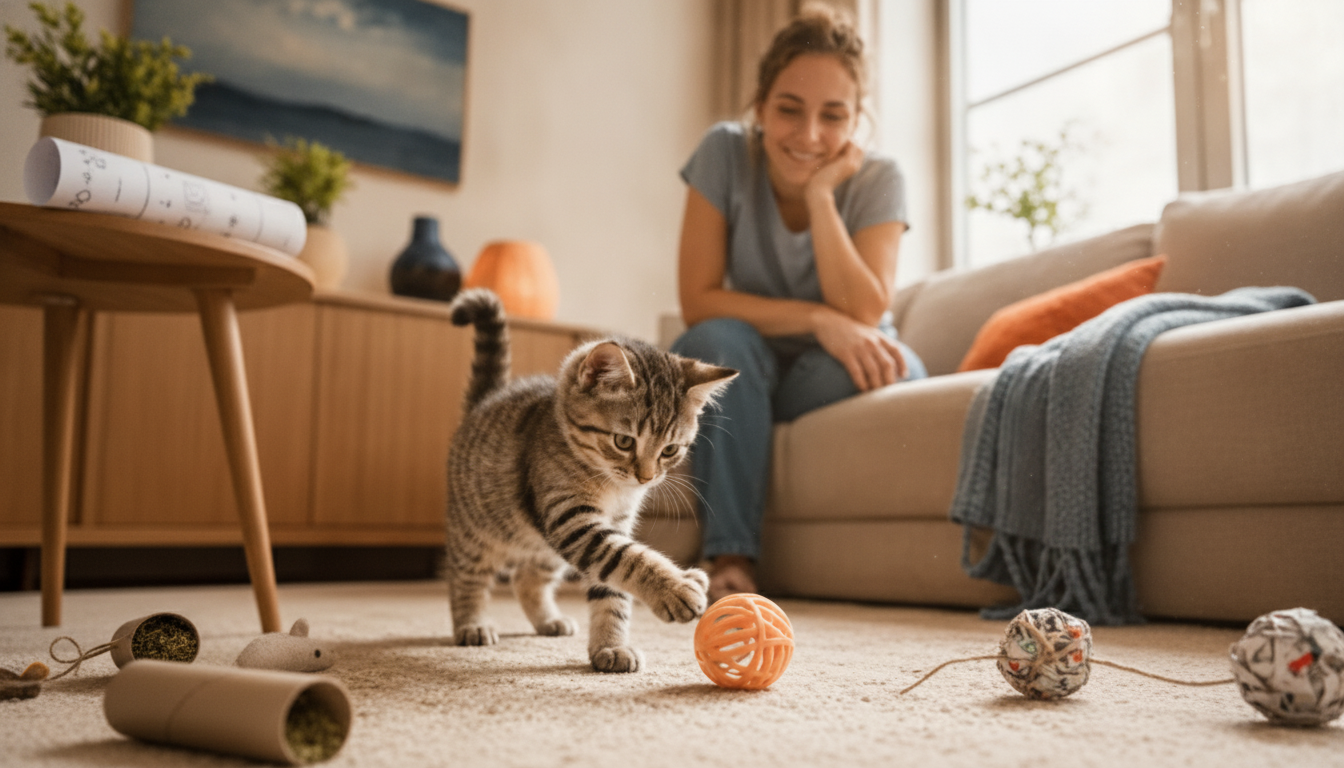
Indoor cats can live long, safe lives—but their instincts don’t turn off just because the front door stays closed. Enrichment is the practical way to meet core needs like stalking, chasing, pouncing, “catching,” scratching, climbing, hiding, and scent exploration. When those needs are met on purpose, many cats become calmer, more social, and easier to live with.
The goal isn’t nonstop stimulation. A good plan balances active play with real recovery time so your cat can nap, groom, and reset. Too much intensity (especially late at night) can create overstimulation, frustration, and the classic after-dark zoomies. The sweet spot is variety with repetition: rotate activities to keep things interesting, but keep a stable daily rhythm so your cat knows what to expect.
Common signs your cat needs more enrichment include boredom vocalizing, destructive scratching, over-grooming, weight gain, and play aggression (like ankle ambushes). If you notice these patterns, start small and get consistent—tiny daily sessions often outperform occasional “big” play days.
Daily Play Routine That Matches Natural Hunt Cycles
Most indoor cats do better with 2–3 short sessions (about 5–15 minutes each) than one marathon playtime. Try building each session around a natural hunt cycle: warm-up, chase, catch, cooldown, then a small meal or treat to “finish” the sequence. This helps many cats settle afterward instead of staying revved up.
Sequence idea: begin with slow wand movements close to the ground (warm-up), increase speed and distance (chase), then let your cat win multiple times (catch). Slow it down again (cooldown), and follow with a snack or part of a meal. An evening session tends to be the most sleep-friendly for many households.
Adjust intensity to the cat in front of you. Kittens may need shorter but more frequent play, while seniors or cats with arthritis usually prefer more ground play and fewer big jumps. If your cat pants, becomes frantic, or starts biting hard, end the session with a calm “catch” and a treat, then offer a quiet rest spot.
Sample Indoor Cat Enrichment Schedule (Printable)
| Time | Activity | Goal | Notes |
|---|---|---|---|
| Morning (5–10 min) | Wand toy or tossed soft toy | Burn quick energy + mental focus | End with a small meal or a few treats |
| Midday (2–5 min) | Food puzzle / foraging scatter | Brain work + slow feeding | Use part of daily kibble allowance |
| Afternoon (5 min) | Window perch + bird video or safe birdwatching | Visual stimulation | Keep volume low; provide opt-out space |
| Evening (10–15 min) | Hunt game: hide-and-seek with toy | Full hunt cycle + bonding | Let the cat “catch” multiple times |
| Before bed (2–3 min) | Calm grooming or treat hunt | Downshift to rest | Skip if the cat gets revved up |
DIY Toys and Low-Cost Enrichment You Can Make Today
Indoor enrichment doesn’t have to be expensive. Many cats prefer “trash” toys because they’re lightweight, noisy, and unpredictable—just keep safety front and center and supervise when needed.
- Paper bag maze (handles removed): Add crumpled paper, a toy, or a pinch of catnip. Supervise if chewing occurs.
- Cardboard box “hide + pounce”: Cut two exit holes. Drop in a ping-pong ball or crinkle toy so it skitters around.
- Toilet-paper-roll treat dispenser: Fold ends inward, poke small holes, add a few treats, and let your cat roll and paw it.
- Sock kicker (no loose strings): Stuff a clean sock with fabric scraps, then sew or tightly knot the end. Supervise play.
- DIY snuffle mat alternative: Hide kibble in a towel roll or under plastic cups for supervised foraging.
If you want a ready-to-print system to rotate ideas without overthinking it, Printable Cat Enrichment Guide with DIY toys and play routines is an easy way to keep routines consistent while still adding novelty.
Food Puzzles, Foraging, and Feeding Enrichment
Food is a powerful enrichment tool because it taps into natural problem-solving. Instead of serving every meal in a single bowl, turn some of that food into “work” using puzzle feeders, lick mats (with wet food), or small treat hunts around the home.
Start easy: larger openings, fewer steps, and obvious locations. Then increase difficulty slowly—smaller openings, fewer treats, or more hiding spots. Keep portions measured so enrichment doesn’t quietly become extra calories. Many households find it simplest to reserve part of the daily kibble allowance specifically for puzzles and scatter feeding.
For novelty without upsetting digestion, rotate formats lightly (wet, kibble, freeze-dried toppers) and keep changes gradual, especially for cats with sensitive stomachs.
Cat-Friendly Home Setup: Vertical Space, Scratching, and Safe Hideouts
Sensory Enrichment: Scent, Sound, and Texture
Multi-Cat Homes: Reduce Tension While Adding Enrichment
Safety Tips and Common Mistakes to Avoid
For deeper guidance on feline environmental needs, review the American Association of Feline Practitioners (AAFP) guidelines and practical enrichment tips from International Cat Care.
Printable Enrichment Guide: A Simple Way to Track What Works
For households also working on noise sensitivity around cleaning routines, Helping Pets Handle Vacuum Stress pairs well with a calm-down routine and predictable safe zones.
FAQ
How much play does an indoor cat need each day?
Many indoor cats do well with 15–30 minutes total per day, split into short sessions. Use a hunt-style sequence (warm-up, chase, catch, cooldown) and finish with food or calm time, adjusting for age, health, and energy level.
What are safe DIY toys for cats?
Safe options include supervised cardboard boxes, paper bags without handles, simple treat tubes, and sewn fabric “kicker” toys with no loose strings. Avoid yarn, ribbon, small detachable parts, and anything your cat can chew into swallowable pieces.
How can enrichment help with nighttime zoomies?
An evening play session followed by a small meal can help complete the hunt cycle and encourage longer sleep. Add daytime foraging and window perches to reduce boredom, and make sure your cat has comfortable rest spots and vertical territory to feel secure.










Leave a comment