Modern Etiquette Made Easy: Texting, Social Media & RSVPs
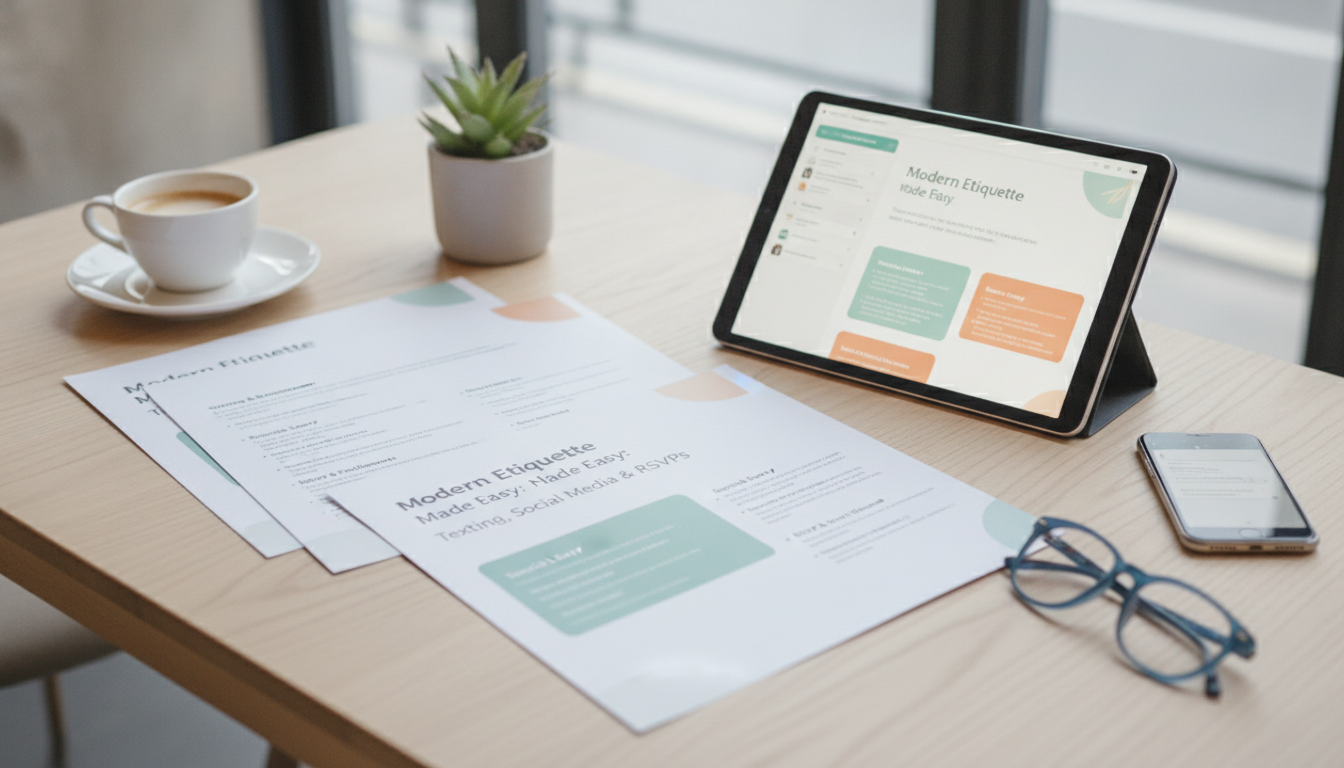
Modern manners didn’t vanish—they changed platforms
Politeness hasn’t disappeared—it has just moved into group chats, comment threads, and calendar invites. The challenge now is less about knowing “formal rules” and more about reducing confusion: responding on time, being clear about plans, and setting boundaries without sounding harsh. A practical way to refresh those skills is a printable guide you can keep open while you write, reply, RSVP, or post.
Modern etiquette works best when it’s simple enough to use today. That’s the goal of the Modern Etiquette Micro‑Course printable digital guide: quick rules, example scripts, and checklists that help daily communication feel calmer and more respectful.
What “modern etiquette” looks like now
Good etiquette is less about perfection and more about being easy to deal with. Four ideas matter most:
- Etiquette as clarity: Helping others know what to expect—timelines, tone, and follow‑through.
- Etiquette as respect: Acknowledging people’s time, privacy, and attention (especially online).
- Etiquette as consistency: Acting similarly across texts, email, social platforms, and in‑person interactions.
- Etiquette as boundaries: Saying no, asking for space, and addressing missteps without escalating the situation.
Traditional guidance still applies, but modern life adds new pressure points—public visibility, instant messaging, and always-on expectations. For a foundational reference, the Emily Post Institute’s etiquette guidance remains a helpful north star.
Texting manners that prevent misunderstandings
Texting is efficient, but it strips away tone, facial expression, and timing cues—so small choices can create big misunderstandings. The most reliable habits are simple:
- Response timing: A quick acknowledgment often beats a delayed “perfect reply,” especially for plans or emotional topics.
- Tone and brevity: Short messages can read as cold; a small softener (“Thanks!” “Got it—appreciate you”) can keep things warm without overexplaining.
- Group chat respect: Avoid piling on; reply to the right person; keep side conversations from hijacking the thread.
- Sensitive topics: If nuance matters, switch channels—phone or in-person reduces misreads.
- Read receipts and reactions: Use them intentionally; a reaction isn’t a substitute for needed info (like “Yes, 7 works”).
Quick texting situations and what to do
| Situation | Best practice | Example reply |
|---|---|---|
| Late response needed | Send a brief acknowledgment and timeframe | “Just saw this—can reply fully tonight.” |
| Declining an invite | Be clear, kind, and avoid vague maybes | “Thanks for thinking of me—can’t make it, but hope it’s great.” |
| Misread tone | Assume good intent; clarify calmly | “Not sure I’m reading this right—did you mean…?” |
| Logistics planning | Confirm time/place and next step | “7 pm at the front entrance—text when you’re here.” |
| Emotional conversation | Switch channels to reduce confusion | “This feels important—can we talk by phone?” |
Social media etiquette: presence without pressure
Social platforms blur “public” and “personal,” and that can create accidental stress. Basic social media etiquette is about minimizing collateral damage—protecting privacy, avoiding performative conflict, and letting people opt out. It helps to remember how widespread these platforms are (see the Pew Research Center social media fact sheet for updated context).
- Commenting: Keep it relevant, avoid private details, and don’t “correct” someone publicly for minor issues.
- Tagging and resharing: Ask before tagging in sensitive contexts; don’t repost private content from closed spaces.
- DM boundaries: Don’t create urgent expectations; use clear openers and respect time zones.
- Public disagreements: Disengage when the goal is no longer understanding; take conflict off the timeline.
- Celebrations and announcements: Be mindful of timing when someone close is navigating a loss or crisis.
When conversations get emotionally charged, it can help to follow evidence-based guidance for digital communication and well-being, like resources from the American Psychological Association.
RSVPs, invites, and cancellations: the reliability rule
Reliable people reduce stress for everyone else. Modern etiquette around invites is mostly about being easy to plan around—and not leaving hosts guessing.
- RSVP promptly: “Yes,” “No,” or “Need to confirm by X date” prevents planning headaches.
- Show up as promised: Attendance is a form of respect; if plans change, communicate early.
- Plus-ones and kids: Never assume; ask before adding guests, even informally.
- Cancellations: Apologize once, offer a brief reason if appropriate, and avoid oversharing.
- Hosts and guests: Hosts set expectations clearly; guests follow the stated format and timing.
Everyday politeness that improves relationships fast
If communication feels tense at home, a structured, printable approach can help everyone stay consistent—especially during busy school weeks. The Homework Help Made Easy Toolkit for Parents pairs well with etiquette basics because routines, clear expectations, and calm language reduce friction for both kids and adults.
How the printable micro-course fits into a busy week
And because etiquette often shows up during planning—trips, meetups, and group logistics—having a simple system for communication can make travel smoother too. For itinerary sharing and “who’s doing what” clarity, the Top 10 Must-See U.S. National Parks + Fast Facts digital travel guide can be a fun companion for organizing group adventures without confusion.
Modern Etiquette Micro‑Course (Printable Digital Guide) at a glance
FAQ
How fast should someone respond to a text or DM?
For time-sensitive messages, respond as soon as you can or send a quick acknowledgment with a timeline. For casual chats, same-day or next-day is typically fine; the polite move is setting expectations when you’ll be delayed.
Is it rude to leave a message on read?
It’s usually fine when no action is needed and the message is purely informational. If the message involves logistics, feelings, or a commitment, a one-line reply creates clarity and prevents stress.
What’s the polite way to change plans after saying yes to an invitation?
Let the host know as early as possible, apologize once, and take responsibility without a long list of excuses. When appropriate, offer a supportive gesture (like checking in later) or suggest an alternative plan.












Leave a comment