Printable Online Dating Profile Blueprint for Better Matches
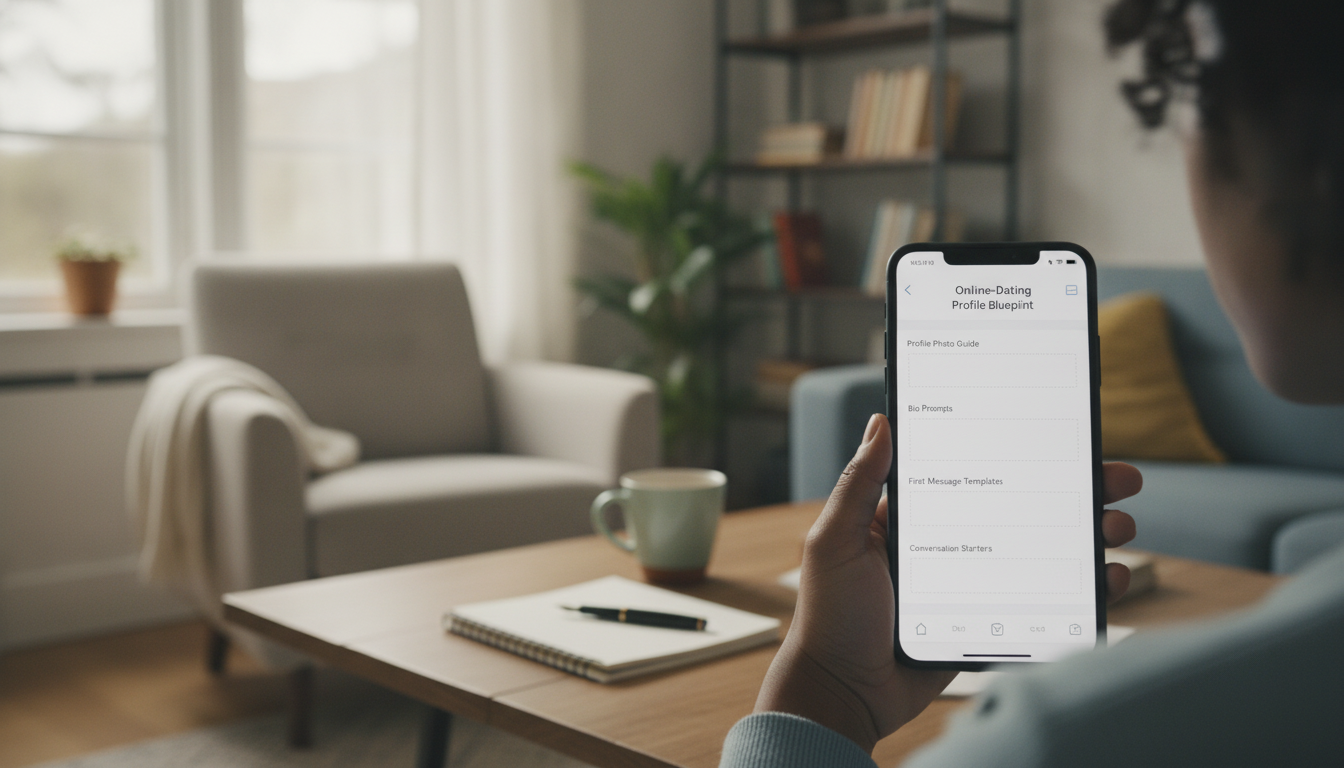
Online-Dating Profile Blueprint: A printable system for profiles, first messages, and better matches
A great match usually starts long before the first date—it starts with how clearly a profile communicates personality, values, and intent. When photos, prompts, and lifestyle details tell the same story, the right people know how to respond—and the wrong fits quietly self-select out. This guide breaks the process into a simple, repeatable blueprint you can print, fill out, and update without reinventing your profile every time.
What “authentic” looks like on dating apps (and why it works)
Authenticity online isn’t about sharing everything—it’s about sharing consistent things. A profile feels real when the tone of the bio matches the energy of the photos, and the prompts back up what you say you want.
- Authentic profiles reduce guesswork by showing the same “you” across photos, prompts, and daily-life details.
- Specificity beats perfection: one concrete ritual or niche interest creates an easy entry point for conversation.
- Alignment matters more than broad appeal: trying to attract “everyone” often attracts mismatches (and burnout).
- A clear relationship goal and tone (intentional, serious, open to a slow burn) helps filter early without sounding rigid.
Authentic vs. generic profile elements
| Profile element | Generic version | Authentic upgrade |
|---|---|---|
| Bio tone | “Just ask” | One sentence on vibe + one sentence on what matters most |
| Interests | “Travel, food, gym” | A specific trip style, a favorite cuisine, a training goal or class |
| Photos | Mostly selfies | Mix of face, full-body, social proof, and “doing something” shots |
| Prompts | Jokes with no info | Light humor + a real preference, value, or story hook |
| Intent | Unstated | Direct but warm: what connection looks like and pace |
Build your profile in 30 minutes: the profile blueprint method
If updating your profile turns into a spiral, use a timed build: one pass for clarity, one pass for warmth. The goal is a profile that reads like a real introduction—not a performance.
- Step 1 — Define three “signal pillars”: (a) lifestyle rhythm, (b) values/relationship style, (c) playful specifics that invite questions.
- Step 2 — Choose a theme: cozy/homebody, outdoorsy/adventure, city/arts, foodie/social, or a deliberate hybrid—then keep photos and prompts consistent.
- Step 3 — Draft an “anchor line” that sums up energy + intent without clichés.
- Step 4 — Write two prompts that show how you spend time and how you build connection (communication style, humor, boundaries).
- Step 5 — Add one gentle filter line that screens for compatibility (schedule, smoking/drinking, kids, distance) without sounding defensive.
Need the printable version of these steps (with fill-in sections and examples)? The Online-Dating Profile Blueprint printable guide turns this into a one-page plan you can refine over time.
Photo selection that boosts trust and clarity
Photos do two jobs: they help someone recognize you, and they show what life with you might look like. That second part is where “better matches” usually come from.
- Lead photo: clear face, natural light, relaxed expression—skip heavy filters and sunglasses.
- Include one full-body photo to reduce uncertainty and improve match quality.
- Use context photos (cooking, hiking, hobby, event) for effortless conversation hooks.
- Limit group photos: one max, and make it obvious which person you are.
- Avoid confusing signals: too many party shots, too many gym mirror selfies, or photos that look like entirely different eras.
Practical note: oversharing can create stress and decision fatigue. Keeping your “public” profile intentional (rather than exhaustive) supports healthier online interactions—especially when messaging volume ramps up. For a broader look at how online dating plays out for different people, Pew Research offers useful context: The Virtues and Downsides of Online Dating. And if the process is feeling physically draining, the APA explains how stress can show up in the body: Stress effects on the body.
First messages that feel natural (and get replies)
If you like structured templates you can copy-and-edit quickly, the Online-Dating Profile Blueprint includes ready-to-use message formats that reduce overthinking while keeping your tone personal.
Turning matches into dates without awkwardness
Want an easy way to suggest a date that matches a “weekend vibe”? A low-key option is to borrow an idea from a shared interest—like planning a scenic walk or day trip. For inspiration, Top 10 Must-See U.S. National Parks + Fast Facts can spark conversation and future plans if you both like the outdoors.
Common profile mistakes that attract the wrong matches
One helpful standard: share enough to be understood, not so much that you feel exposed. Principles from digital identity guidance emphasize usability and safety—only provide what supports the interaction you actually want: NIST Digital Identity Guidelines.
Printable support: Online-Dating Profile Blueprint
If you want a faster path from “I should update my profile” to “this actually reflects me,” use a printable system you can iterate. The Online-Dating Profile Blueprint printable guide is built for quick edits: update one section at a time, track what gets better conversations, and refine without starting over.
If you love templates and checklists in general, you might also like the structured format of the Homework Help Made Easy Toolkit for Parents—it’s a different topic, but the same idea: less guesswork, more repeatable systems.
FAQ
How many photos should a dating profile have?
Four to six photos is a strong range for clarity. Include a clear face shot, a full-body photo, and a couple of context/activity photos; keep group photos to one maximum.
What should a first message say to get a reply?
Use a specific observation from their profile, add one small personal detail, and end with an easy question. Keep it brief and skip generic openers unless you attach a real hook.
How soon should a match be asked on a date?
After a comfortable back-and-forth that shows mutual interest—often within a few days. Suggest a simple public micro-date and offer two time options to make it easy to answer.










Leave a comment