SMART Goal Planner: Printable System for Real Progress
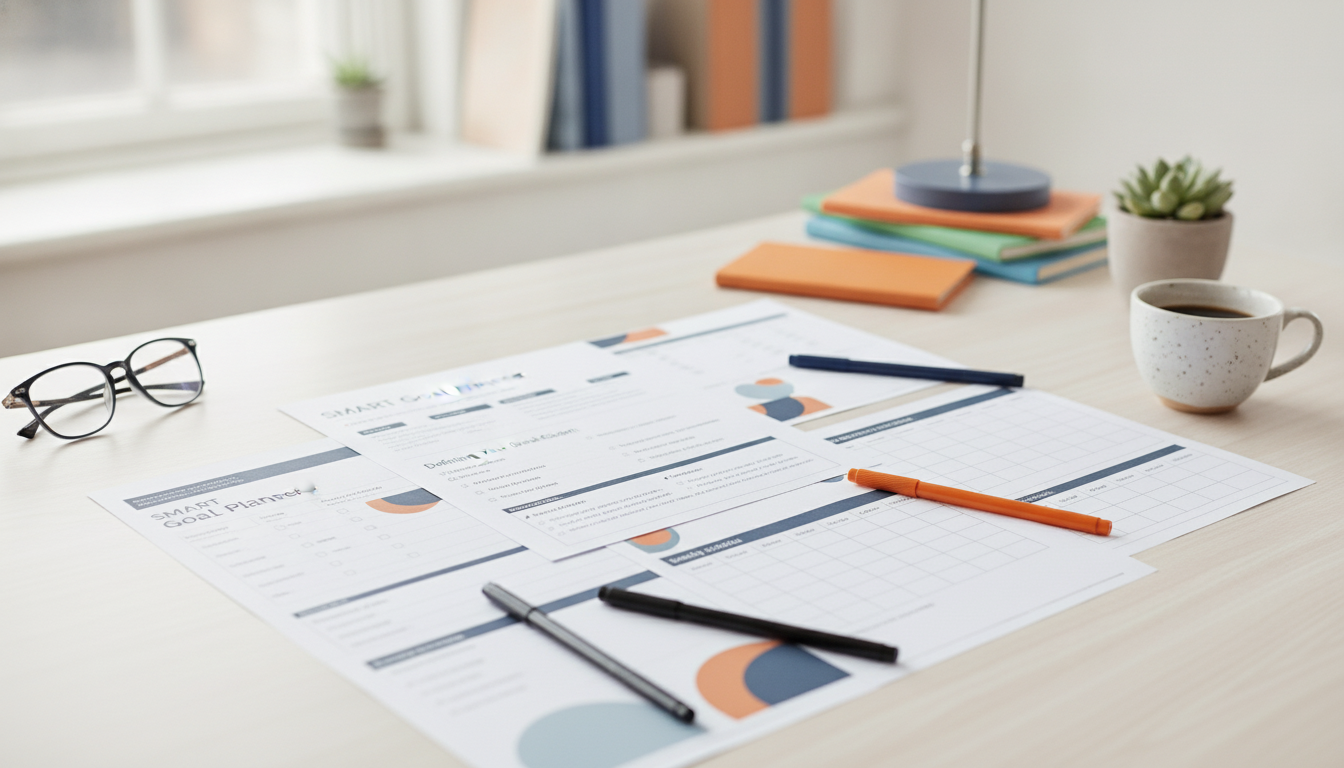
Goal-Setting That Sticks: A Printable System for SMART Goals, Daily Focus, and Real Progress
Big goals are easy to write down and surprisingly hard to finish. A practical goal-planning system bridges that gap by turning a vague intention into clear outcomes, weekly priorities, and daily actions you can actually complete. The approach below uses a simple printable workflow built around SMART goals, focused planning, and quick review habits—so progress stays visible, measurable, and motivating.
What “real results” looks like in a goal plan
A goal plan produces results when it’s built around an outcome with a finish line—not a wish, and not an endless to-do list. “Finish” should be obvious to an outside observer: submitted, shipped, completed, saved, published, or performed.
Strong plans track two types of indicators. Your lagging indicator is the result (the final outcome). Your leading indicators are the actions that create the result (workouts completed, pages drafted, applications sent). Keeping the leading indicators small and specific makes it easier to stay consistent when life gets busy.
Real results also require checkpoints. Weekly reviews catch drift before it turns into a lost month. Mid-goal adjustments protect momentum when a plan meets reality. End-of-goal reflection helps you keep what worked and drop what didn’t.
Most importantly, a workable system reduces decision fatigue. By pre-deciding what matters most each day, you spend less energy figuring out what to do and more energy doing it.
Turn a vague goal into a SMART goal (without overcomplicating it)
SMART goals work because they translate hope into clear commitments. Research on goal-setting consistently finds that specific, challenging (but attainable) goals tend to improve performance compared to vague intentions, especially when paired with feedback and commitment. For a deeper dive, see Locke & Latham’s overview in American Psychologist (APA) and a practical summary from the University of Minnesota Libraries.
- Specific: Define exactly what “done” means using observable language (ship, finish, submit, save, run).
- Measurable: Pick a number or milestone list that proves progress (pages, dollars, sessions, modules, clients).
- Achievable: Choose a pace that fits current time and energy; aim for consistency over intensity.
- Relevant: Connect the goal to a bigger value (health, family, career growth, independence) so it survives low-motivation days.
- Time-bound: Set a deadline and add interim dates to prevent last-minute crunch.
| Area | Vague Goal | SMART Version | Proof of Progress |
|---|---|---|---|
| Health | Get fit | Complete 12 strength workouts in 4 weeks (3/week) | Workout log + dates |
| Money | Save more | Save $500 by Aug 31 by transferring $25 every weekday | Bank transfer record |
| Career | Learn a skill | Finish a 10-module course by Sept 15, 2 modules/week | Modules completed |
| Home | Declutter | Declutter 5 drawers by Sunday, 1 per day | Before/after photos |
Plan the path: milestones, projects, and next actions
Once the goal is SMART, build a path you can follow without constantly re-planning.
- Milestones (3–5): Break the outcome into checkpoints that feel like wins. If you can’t celebrate it, it’s probably too vague.
- Projects: Translate each milestone into a short list of deliverables, not a sprawling task dump. Deliverables create clarity (outline finished, first draft written, budget drafted).
- Next actions: Define actions you can start in under 10 minutes (email X, outline Y, schedule Z). If an action can’t be started quickly, it’s still a project.
- Constraints: Add guardrails that protect focus—time blocks, a budget limit, or a “not-to-do” rule (no social media before the top task is done).
- Minimum viable week: Identify the smallest set of actions that still counts as progress. This keeps your streak alive during travel, deadlines, or low-energy weeks.
Use a printable planner to keep goals visible day to day
Printables shine because they stay in your line of sight. When your goal is physically visible, you’re more likely to choose actions that match it.
For a ready-to-print system that combines goal clarity prompts, a SMART builder, milestone mapping, weekly plans, daily focus pages, and review sheets, consider the Goal-Setting Guide for Real Results – Printable Goal Planner, SMART Goals Workbook & Productivity Template for Achievable Success.
If one of your goals involves school routines or supporting a student at home, the Homework Help Made Easy Toolkit for Parents – Printable Guide for Creating Study Habits, Homework Strategies & Independent Learning can pair well with a weekly planning page to make study sessions predictable and easier to follow through on.
A simple review rhythm that prevents drift
Common goal-setting pitfalls (and what to do instead)
Printable toolkit for structured goal planning and productivity
| Choice | Good For | Tip |
|---|---|---|
| Letter/A4 | Binders and standard printers | Use hole-punched sheets for easy rearranging |
| Undated pages | Flexible start dates | Print only what is needed for the next 2–4 weeks |
| Black-and-white | Lower ink use | Add color with highlighters for priorities |
FAQ
How many goals should be worked on at the same time?
One to two primary goals is the sweet spot for most people, plus a short maintenance list (health basics, bills, household). Anything else can go into a backlog so it doesn’t compete for daily attention.
What if a SMART goal feels discouraging because it’s too ambitious?
Adjust the scope, timeline, or weekly frequency until it feels doable. A “minimum viable” version (the smallest weekly effort that still counts) keeps progress moving and can be increased during your weekly review.
Do printable goal planners work better than apps?
Printables are often better for visibility and focus because they stay in front of you, while apps are great for reminders and portability. A simple hybrid works well: plan on paper, then use a phone reminder for time-blocks or recurring sessions.












Leave a comment