Stop Vacuum Fear: Calm Training Steps for Dogs & Cats
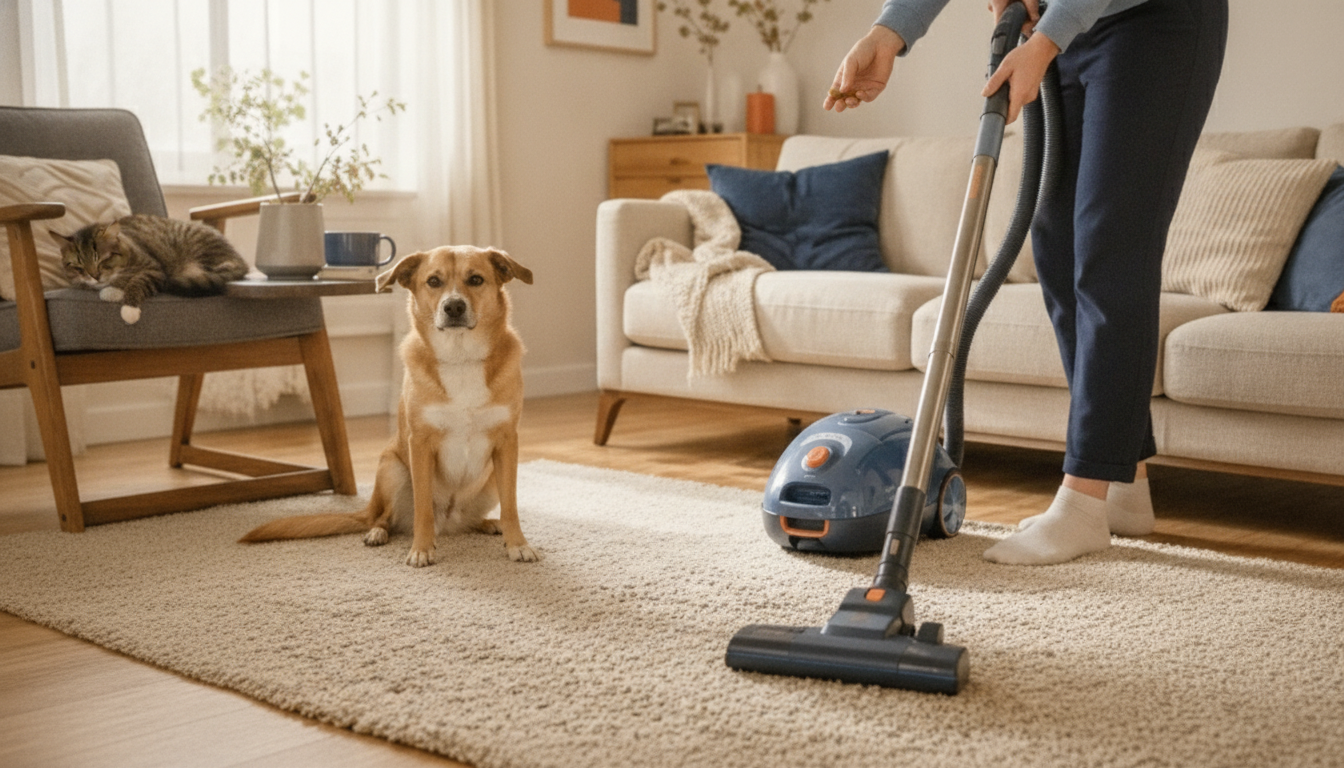
Helping Pets Handle Vacuum Stress: A Calm, Step-by-Step Plan for Dogs and Cats
Vacuum cleaners combine loud noise, sudden movement, and unfamiliar airflow—an intense mix for many pets. The good news: with a gradual plan, the right setup, and consistent rewards, most dogs and cats can learn to stay relaxed (or at least feel safer) during cleaning. The goal isn’t to force “bravery,” but to build predictability and positive associations while protecting your pet’s sense of control.
Why vacuums feel scary to pets
Vacuum fear is common because it stacks multiple triggers at once. Understanding what your pet is reacting to helps you pick the right first step.
- Sound sensitivity: High volume plus high-frequency motor noise can be physically uncomfortable—especially for noise-sensitive breeds or senior pets.
- Unpredictable movement: The vacuum approaches, retreats, and changes direction quickly, which can trigger chase, herding, or fear responses.
- Scent and airflow: Stirred-up dust and “machine” smells can overwhelm sensitive noses; airflow may feel like an oncoming threat.
- Learning history: One frightening moment (a slipped rug, bumped tail, sudden start) can create a lasting association.
- Body language to notice: Tucked tail, flattened ears, dilated pupils, panting, lip licking, hiding, barking, lunging, or freezing.
If your pet is growling, snapping, or panicking, treat it as a safety issue and start with management (separation) before any training.
Set up the environment for success before training
Before you work on training, make vacuuming less overwhelming. Many pets improve simply because the environment stops “trapping” them in the scary experience.
- Create a safe zone: A bedroom, crate, covered carrier, or quiet room with familiar bedding. Add white noise or calm music to soften sudden sounds.
- Control access: Use baby gates or closed doors so the vacuum never “chases” the pet from room to room.
- Reduce intensity: Start with the vacuum unplugged; later use the lowest power setting if available. Avoid tight spaces where pets feel cornered.
- Offer enrichment: For dogs, long-lasting chews or a lick mat. For cats, a food puzzle or a small foraging scatter in the safe zone.
- Keep routines predictable: Vacuum at consistent times so pets can anticipate the pattern instead of being surprised.
If you want a structured routine you can repeat (safe zone → short exposure → reward → break), the printable guide Helping Pets Handle Vacuum Stress is designed for this exact problem and is easy to follow in short daily sessions.
Desensitization and counterconditioning in small steps
Desensitization means gradually exposing your pet to the vacuum at a level they can handle. Counterconditioning means pairing that exposure with something they love (usually food) so the emotional response shifts from “uh-oh” to “good things happen.” Keep sessions short—often 3–5 minutes—then end on a success.
Step 1 (vacuum off, far away)
Bring the vacuum into view while it’s off. Reward calm behavior: a relaxed posture, sniffing, or even looking away and choosing to disengage.
Step 2 (movement without sound)
Gently roll the vacuum a few feet. Reward as it moves, then stop. Repeat in brief sessions over several days.
Step 3 (sound at a distance)
Turn the vacuum on in another room for 1–2 seconds. Immediately reward, then turn it off. Gradually increase duration only if your pet stays comfortable.
Step 4 (sound + movement)
Step 5 (realistic cleaning)
| Stage | What happens | Reward timing | When to advance |
|---|---|---|---|
| Vacuum present (off) | Vacuum is visible, not moving | Treats for calm looks/sniffs | Pet remains loose-bodied for 2–3 short sessions |
| Vacuum rolls (off) | Vacuum moves slowly a few feet | Treats as it moves, then stops | No hiding, barking, or freezing |
| Vacuum on (separate room) | Sound briefly from a distance | Treat immediately after the sound | Pet continues eating and recovers quickly |
| Vacuum on (same room, far) | Sound + minimal movement | Treats in rapid succession | Pet can settle and take breaks |
| Normal vacuuming | Routine cleaning with management | Occasional reinforcement | Pet chooses safe zone or stays calm nearby |
Common mistakes that slow progress
Extra support for severe fear or aggression
For humane training principles and behavior guidance, see the American Veterinary Society of Animal Behavior (AVSAB) position statements, the ASPCA dog behavior resources, and International Cat Care’s guide to understanding cat behavior.
A practical guide designed for vacuum-related pet stress
When progress feels inconsistent, a written routine helps everyone in the household follow the same steps. Helping Pets Handle Vacuum Stress focuses on low-pressure training: distance, choice, reinforcement, and troubleshooting for common patterns like barking, herding, hiding, or refusing treats.
If you’re juggling training alongside busy home routines, a simple schedule and consistency tracker can also make sessions easier to stick with. The Homework Help Made Easy Toolkit for Parents can be repurposed as a household routine planner (timers, checklists, and predictable “quiet time” blocks) so vacuum practice stays brief and consistent.
FAQ
Should a pet be allowed to watch the vacuum, or is it better to keep them in another room?
If your pet is highly stressed, safe separation in another room is usually the kindest and safest option. Watching can be helpful only during training, at a comfortable distance, where the pet can choose to move away without being followed.
How long does it take for a dog or cat to get used to the vacuum?
Many pets improve in days to a few weeks with consistent, short sessions, but severe fear can take longer. Progress often comes in small increments, and occasional setbacks are normal—adjust the difficulty and return to the last easy step.
What if the pet tries to attack or herd the vacuum?
Use management immediately (gates, closed doors, leash, or a safe zone) so rehearsal of the behavior stops. Redirect to an incompatible activity like a mat stay, lick mat, or scatter feeding, and seek professional help if aggression escalates or anyone is at risk.











Leave a comment